
In short
- Use the effective rate per unit — bill divided by units — not the energy charge alone
- Size on 4.4 units per kWp per day for Gujarat, the conservative end of the published range
- Plan roughly 100 sq ft per kW, and measure usable roof rather than total roof
- Size to daytime load, not annual consumption, unless the export arrangement justifies otherwise
From rupees to units
Divide the monthly bill by your effective rate per unit to get monthly consumption. Use the effective rate — total bill divided by units — not the energy charge alone, because a Gujarat bill also carries the fuel and power purchase price adjustment, currently ₹2.30 per unit since 1 July 2025, plus duty and fixed charges.
Using the energy charge alone will overstate your consumption and oversize the plant. This is a common and expensive mistake, and it flatters the vendor rather than the buyer.
From units to kilowatts
Gujarat rooftops return roughly 1,600 to 1,800 kWh per kWp per year, which is about 4.4 to 4.9 units per kWp per day. We size on the conservative end at 4.4.
Divide daily consumption by that yield and you have an indicative array size. A site consuming 2,500 units a day points to roughly 570 kW. Round it — a first estimate carrying two decimal places is pretending to a precision it does not have.
From kilowatts to roof area
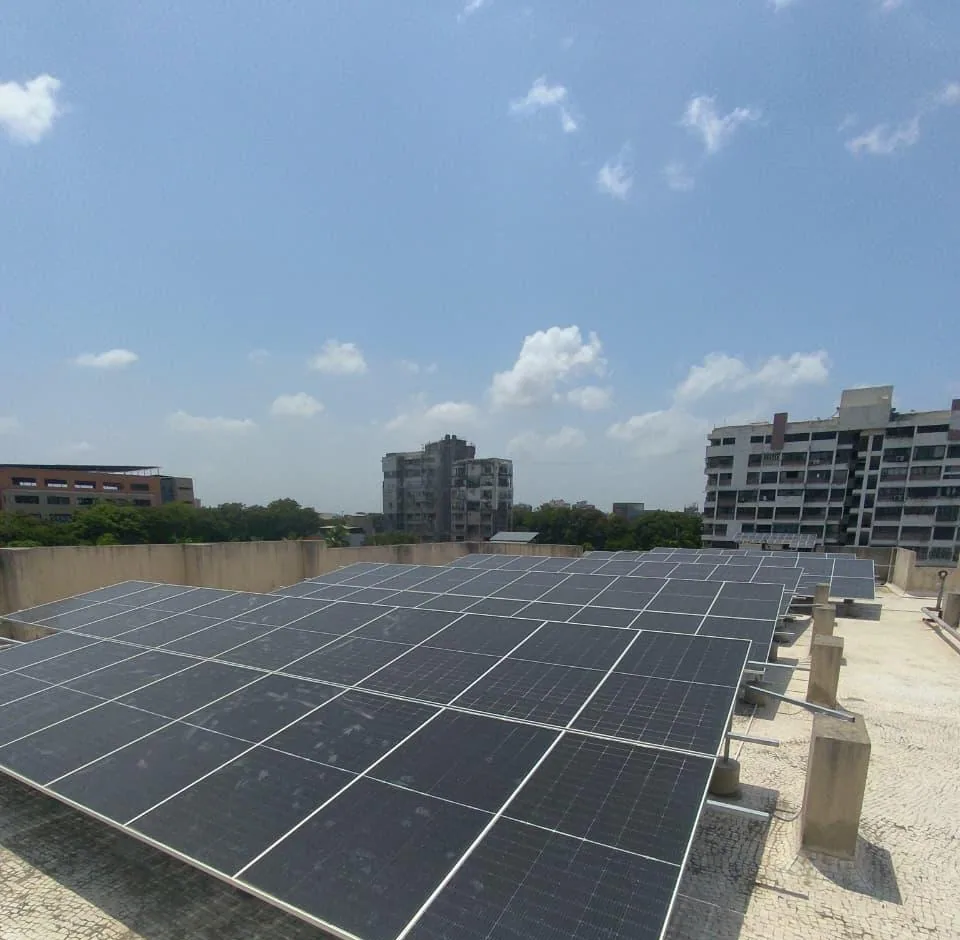
Plan at about 100 sq ft per kW, consistent with MNRE planning at roughly 10 square metres per kW. That figure already allows for row spacing and walkways on a tilted rooftop array.
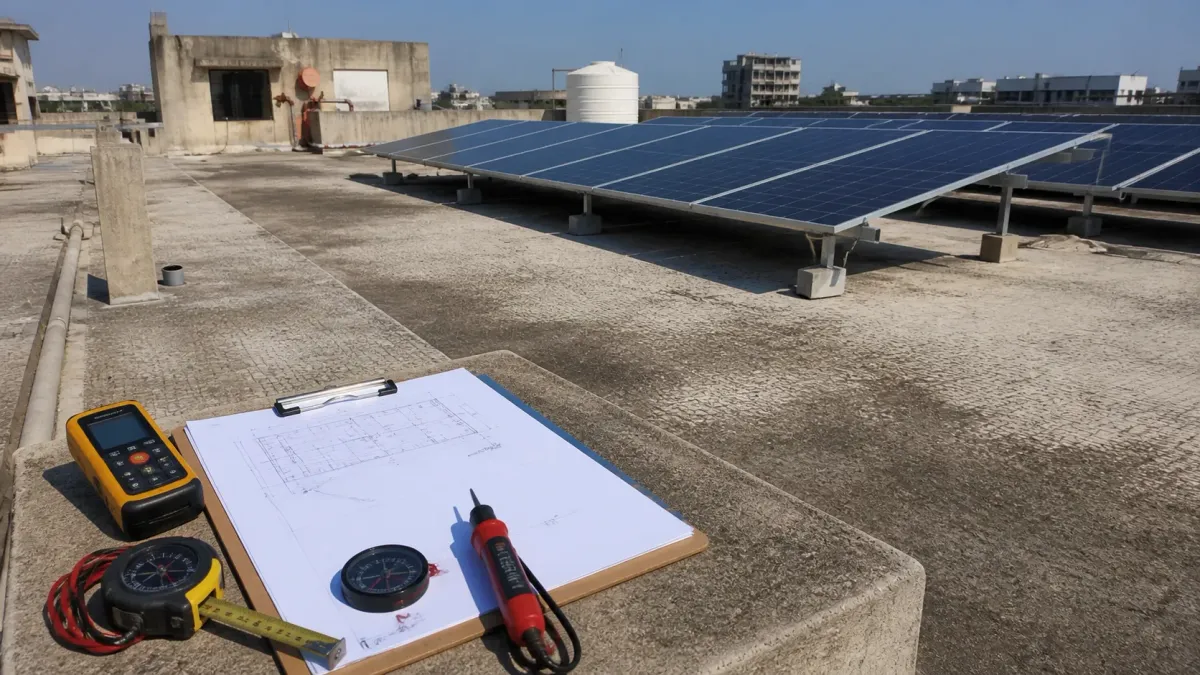
Usable area is not total area. Vents, tanks, skylights, machine rooms, fire routes and maintenance access all subtract, and the shadow each casts subtracts more. A roof that measures 60,000 sq ft may offer 40,000 sq ft that is actually buildable.
Why annual consumption is the wrong target
The instinct is to size for 100% of consumption. For most industrial sites that is the wrong target, because consumption includes night shifts and the array produces nothing then.
Sizing to daytime load means almost every unit displaces a retail-rate unit. Sizing to annual consumption means the surplus at midday relies on the export arrangement for value, which is generally worth less. Which is right depends on your shift pattern, and that is a question about your operation rather than your roof.
What the estimate cannot see
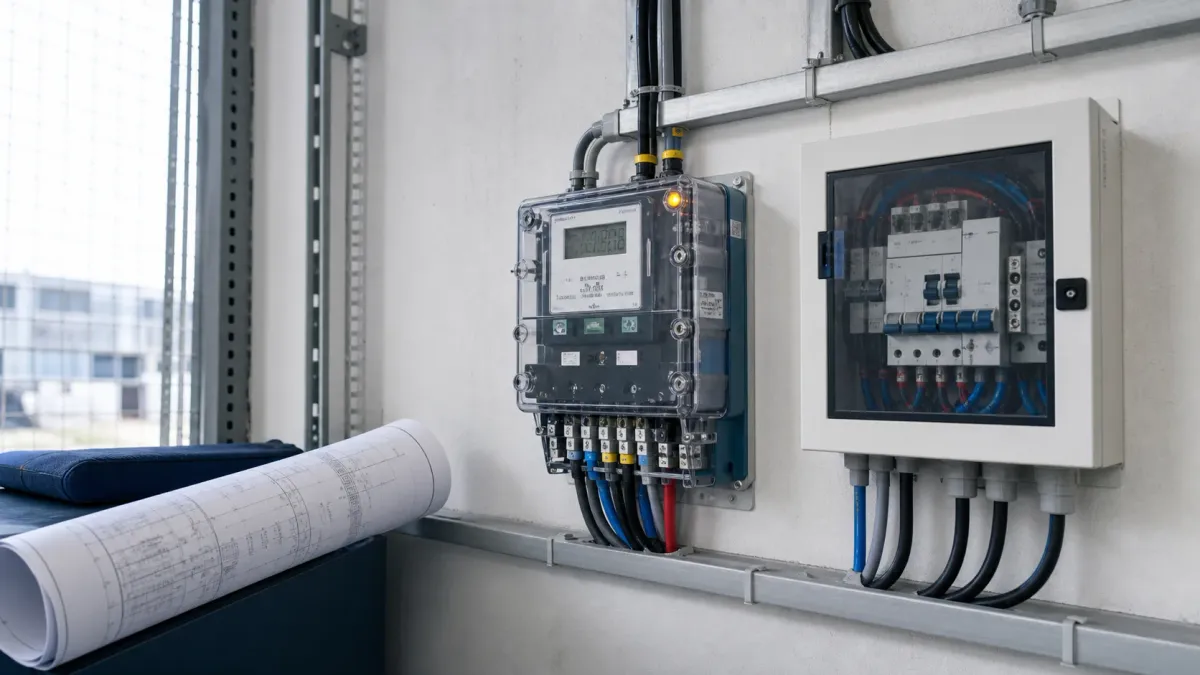
Structural capacity, shading through the day and year, cable route length, the condition of the electrical room, transformer headroom in your area, and whether your contracted demand puts you on the LT or HT route. Each can change the final capacity.
Treat the bill-based figure as the number that tells you whether to have the conversation. The survey produces the number you build.
Questions we are asked about this
How do I calculate solar system size from my electricity bill?
Divide the monthly bill by your effective rate per unit to get consumption, divide by 30 for daily units, then divide by the daily yield per kWp — 4.4 for Gujarat. The result is an indicative array size in kW.
How much roof area does 100 kW of solar need?
About 10,000 sq ft of usable, shade-free area, planning at roughly 100 sq ft per kW. Usable area excludes vents, tanks, skylights, fire routes and the shadows they cast.
Should I size solar to cover my entire electricity bill?
Usually not, if you run night shifts. An array produces nothing at night, so sizing to annual consumption creates midday surplus that depends on the export arrangement for value. Sizing to daytime load displaces units at retail rate.
How accurate is a bill-based estimate?
It is good enough to decide whether to proceed and roughly what scale to plan for. It cannot see structural capacity, shading, cable route or transformer headroom, any of which can change the final capacity.
Work out what this means for your site
The calculator gives a first capacity range from one bill. A survey turns that into something you can put in a business case.