In short
- Net metering in Gujarat runs from 1 kW to 1 MW; beyond that the arrangement changes
- LT connectivity now extends to 150 kVA of contracted demand after the Fourth Amendment to the Supply Code
- Area solar is capped at 30% of the distribution transformer capacity, so a neighbour can affect your project
- Most delays come from the application not matching the utility record, not from the engineering
The capacity ceiling that applies to you
Gujarat allows net metering for grid-interactive rooftop systems from 1 kW up to 1 MW. Above 1 MW the arrangement changes, and a large plant planning beyond that ceiling should look at gross metering or an open-access structure rather than assuming the same rules extend upward.
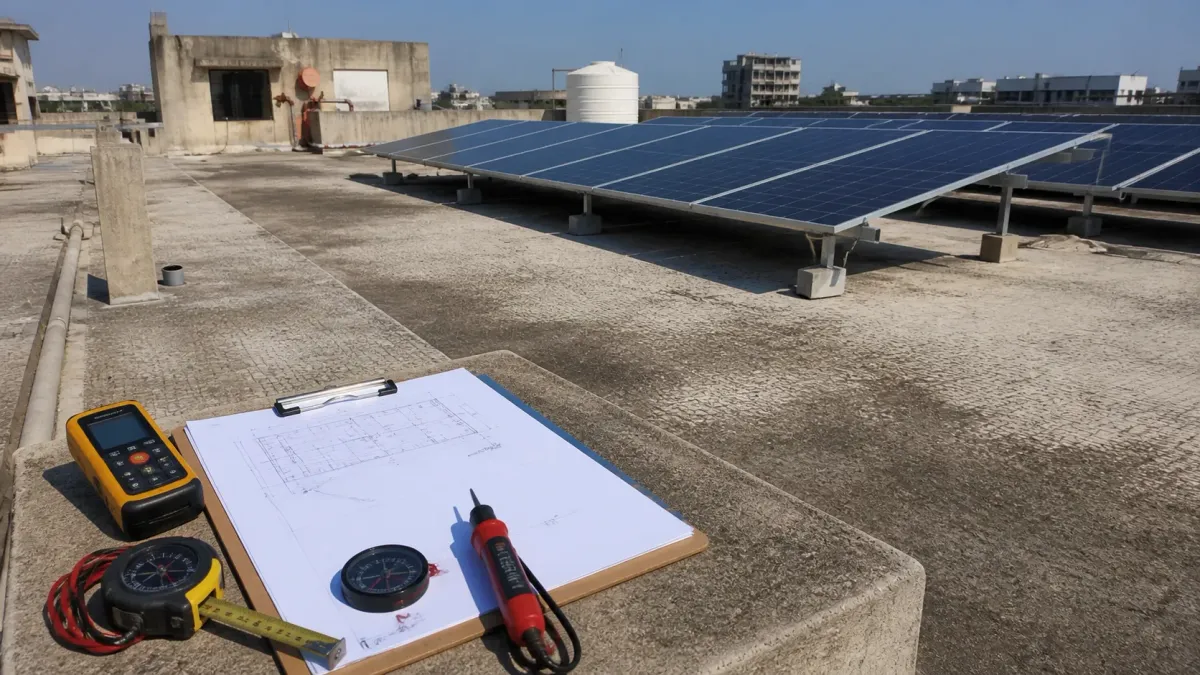
That single number reshapes a lot of projects. A site with 40,000 sq ft of usable roof could physically carry well over 1 MW, so the roof stops being the binding constraint and the regulation becomes it. Knowing this before a layout is drawn saves redrawing it afterwards.
LT or HT, and why it matters early
Connectivity at the LT level was previously limited to 100 kVA of contracted demand. Following the Fourth Amendment to the Supply Code, consumers can now opt for LT connectivity up to 150 kVA of their contracted demand, and GERC approved a Fifth Amendment to the net metering regulations with effect from 4 November 2025.
For a mid-size commercial building this is the difference between a straightforward LT tie-in and an HT scheme with its own transformer, protection and inspection route. It changes cost, programme and the drawings you submit, so it is settled before design rather than during it.
Transformer headroom is a real constraint
The cumulative capacity of all solar connected in an area is capped at 30% of the distribution transformer capacity serving it. This is a grid stability safeguard and it is not negotiable at the level of a single consumer.
It also means a neighbour can affect your project. In a dense industrial estate where several units have already installed, the headroom on a shared transformer may be gone. This is checked at enquiry stage, because discovering it after a structure is fabricated is expensive.
What the application actually needs to line up
The connection details come first: latest bill, sanctioned load, tariff category, meter details and the consumer name exactly as the utility holds it. A mismatch between the application and the utility record is the most common cause of delay, and it is entirely avoidable.
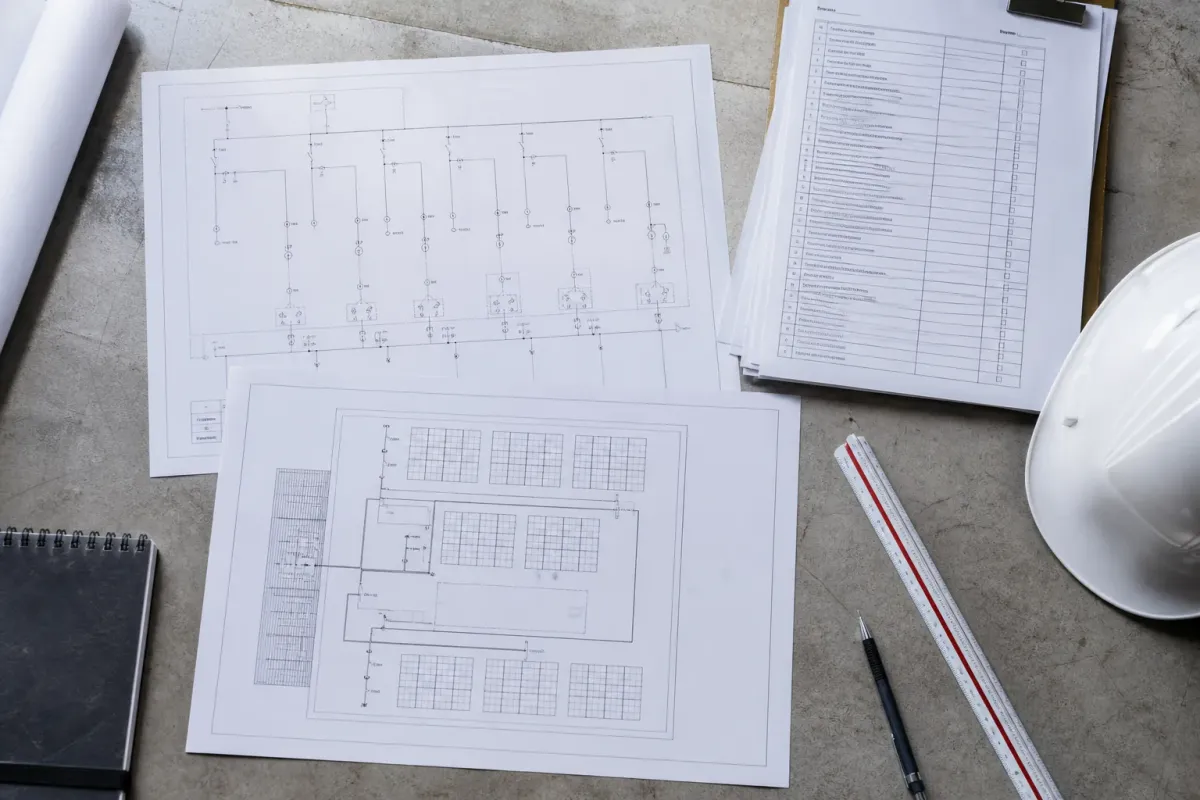
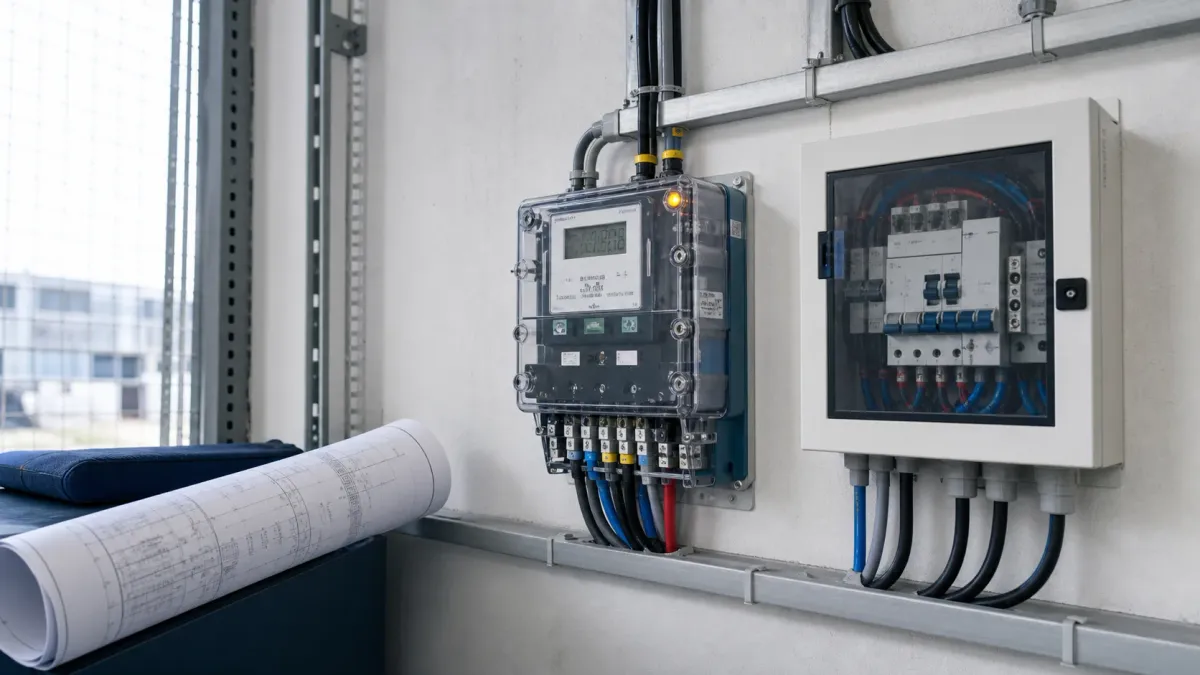
Then the technical set has to describe one system. The single-line diagram, the proposed inverter capacity, the protection scheme and the meter arrangement should agree with each other. If equipment changes after submission — a different inverter rating, a revised string layout — the documents change with it.
- Latest electricity bill and consumer number
- Sanctioned load and tariff category
- Single-line diagram matching the proposed equipment
- Inverter and protection equipment schedule
- Structural and layout drawings for the array
- Test reports and commissioning records at the end
Who owns the correspondence
The distribution company may raise queries, ask for revised documents or schedule an inspection. One person should own that trail, so the technical reply and what is physically built on site stay consistent.
Where this goes wrong is usually organisational rather than technical: the vendor answers a query with one assumption while the site team works to another. Keeping the application, the drawings and the installation under a single project record avoids it.
Questions we are asked about this
What is the maximum capacity for net metering in Gujarat?
Net metering applies to grid-interactive rooftop systems from 1 kW up to 1 MW. A project above 1 MW is evaluated under a different arrangement, which may be gross metering or an open-access structure depending on the consumer and the site.
Can an industrial consumer connect solar at LT?
LT connectivity is available up to 150 kVA of contracted demand, raised from 100 kVA under the Fourth Amendment to the Supply Code. Larger contracted demand is connected at HT, which changes the protection scheme and the approval route.
Why would a net metering application be refused on transformer grounds?
Cumulative solar in an area is limited to 30% of the capacity of the distribution transformer serving it. If earlier installations nearby have used the available headroom, a new application can be constrained regardless of the roof or the equipment proposed.
How long does the approval take?
It depends on the consumer category, capacity and the current utility workload, so we do not quote a fixed period. What reliably shortens it is submitting a set where the bill, sanctioned load, drawings and equipment schedule all agree.
Work out what this means for your site
The calculator gives a first capacity range from one bill. A survey turns that into something you can put in a business case.